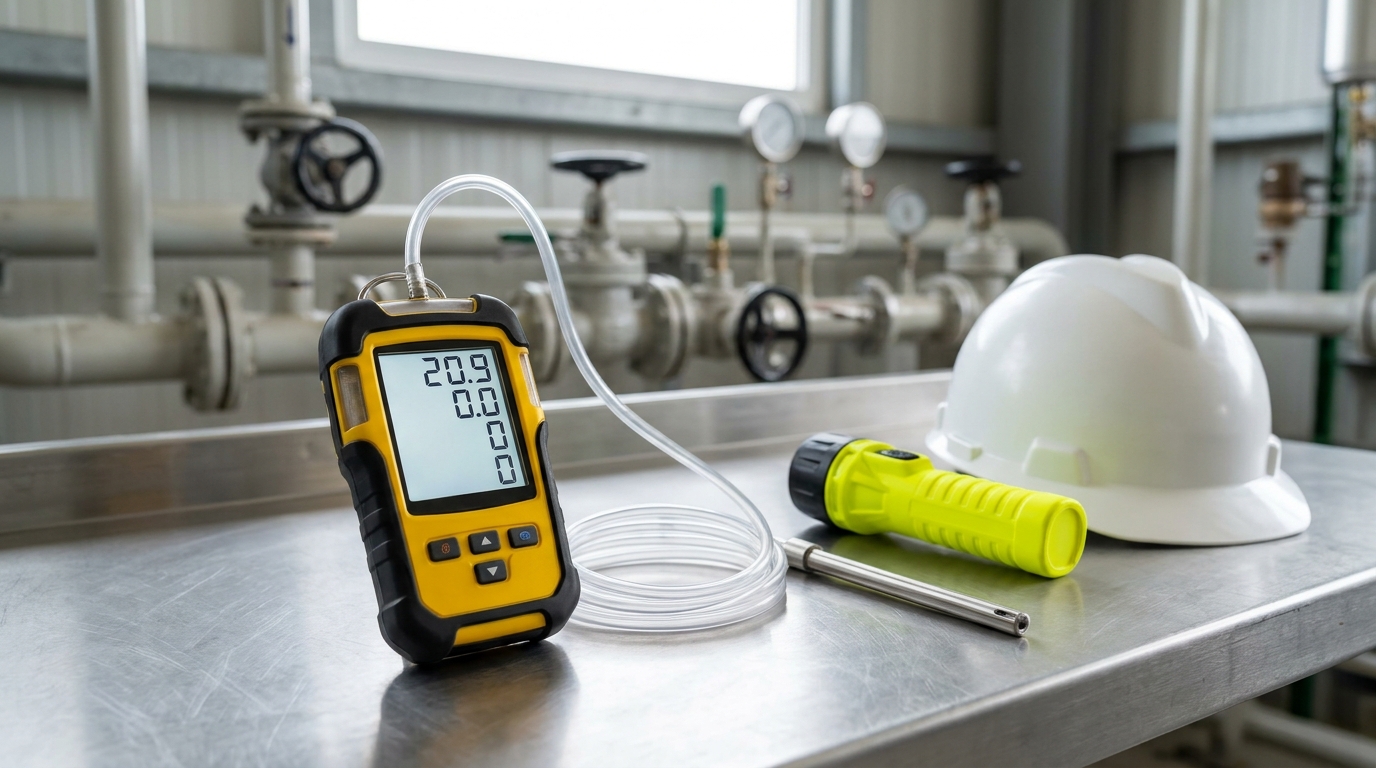
Atmospheric hazards inside tanks, manholes, and vessels are often invisible and odorless. OSHA 1910.146 mandates atmospheric testing before entry and continuously during occupancy using a calibrated 4-gas monitor.
4-Gas Detector Safe Entry Thresholds
| Gas | Safe Entry Range | Low Alarm Threshold | Immediate Action / Danger | Primary Hazard |
|---|---|---|---|---|
| Oxygen (O₂) | 19.5% – 23.5% (Normal 20.9%) | < 19.5% or > 23.5% | Evacuate immediately | Asphyxiation / Oxygen-enriched fire |
| Flammable Gases (LEL) | 0% | 10% LEL | ≥ 10% LEL — Entry prohibited | Fire & Explosion |
| Hydrogen Sulfide (H₂S) | 0 ppm | 10 ppm | 15 ppm STEL / 100 ppm IDLH | Olfactory fatigue & respiratory arrest |
| Carbon Monoxide (CO) | 0 ppm | 25 – 35 ppm | ≥ 100 ppm | Silent odorless poisoning |
Stratified Sampling & Daily Bump Test
- OSHA Testing Order: Always evaluate O₂ first, LEL second, and Toxic gases (H₂S/CO) third.
- Sample Top, Middle, and Bottom: Lighter gases (Methane) rise to the top, CO hovers mid-level, and heavier gases (H₂S) settle at the bottom.
- Bump Test Daily: Verify sensor response and audible/vibrating alarms before every shift; perform full calibration per manufacturer schedule (typically every 6 months).
Log Gas Readings Directly on Digital PTWs: Record timestamped confined space gas tests offline with SafetyPro HSE. Claim your free 1-month Plus launch code.