
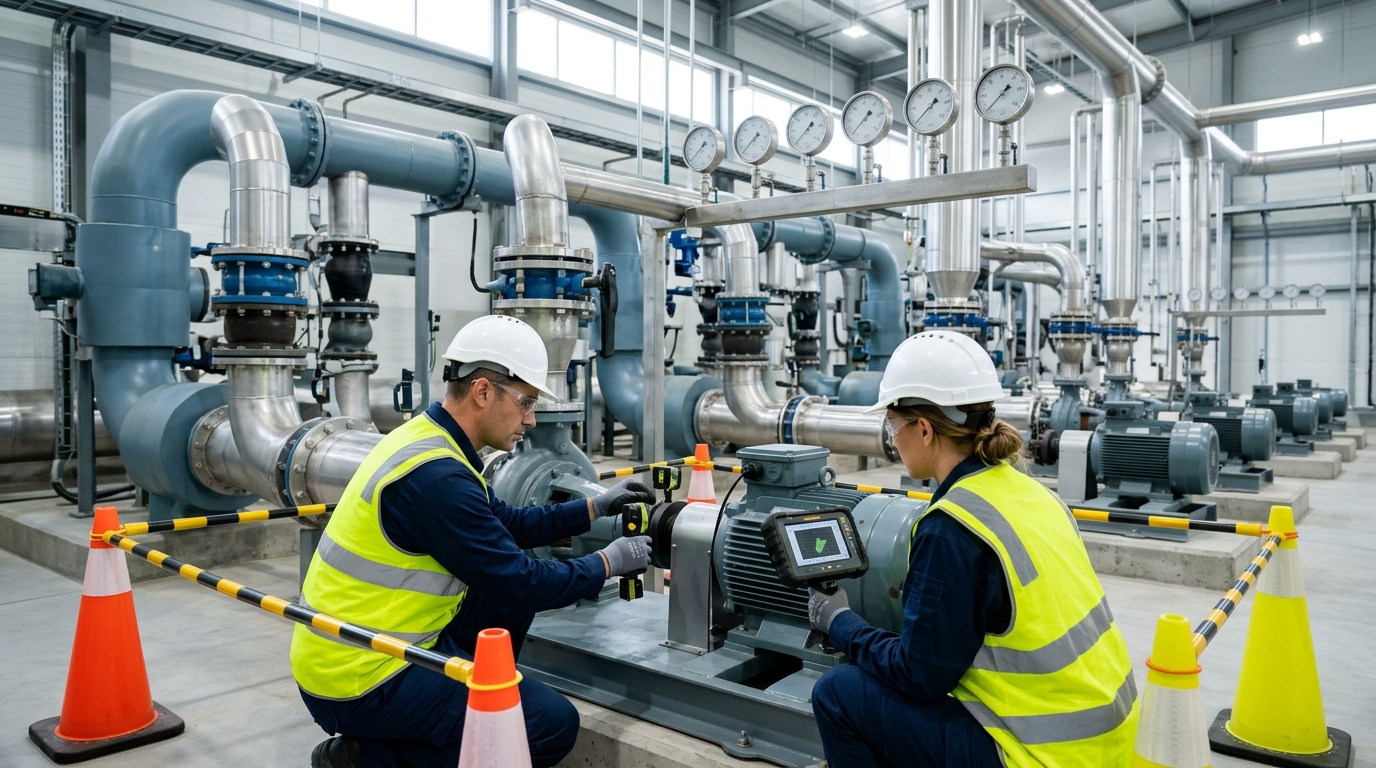
Plant rooms and chilled-water networks pack four severe hazards into tight spaces: heavy rigging, hot work, night-time radiography (RT), and high-pressure testing. Skipping one inspection gate before thermal insulation means stripping cladding later at high cost.
Four Mandatory Mechanical Quality and Safety Gates
- Material Receiving and Laser Alignment: verify MTC 3.1 certificates and pipe schedules on delivery. After rigging pumps and chillers onto vibration isolators, complete soft-foot checks and laser shaft alignment before and after pipe bolting, holding parallel offset within 0.05mm and angular offset within 0.05mm per 100mm.
- Weld Fit-Up and NDT: confirm approved WPS, bake electrodes at 300 to 350 C, and check root gap (2 to 3mm) and internal Hi-Lo (<= 1.5mm) before welding. For RT shoots, enforce calculated radiation exclusion boundaries with sentries at every entrance.
- Star-Pattern Flange Torquing: fit new gaskets and torque bolts in a cross sequence across three passes (30%, 70%, 100%) using a calibrated wrench.
- Hydrostatic Pressure Testing (1.5x): fill with clean water, vent high points, and hold 1.5x working pressure for two to four hours using two calibrated gauges rated at 1.5 to 2x test pressure.
Non-Negotiable Hydro-Test and Hot Work Safety Rules
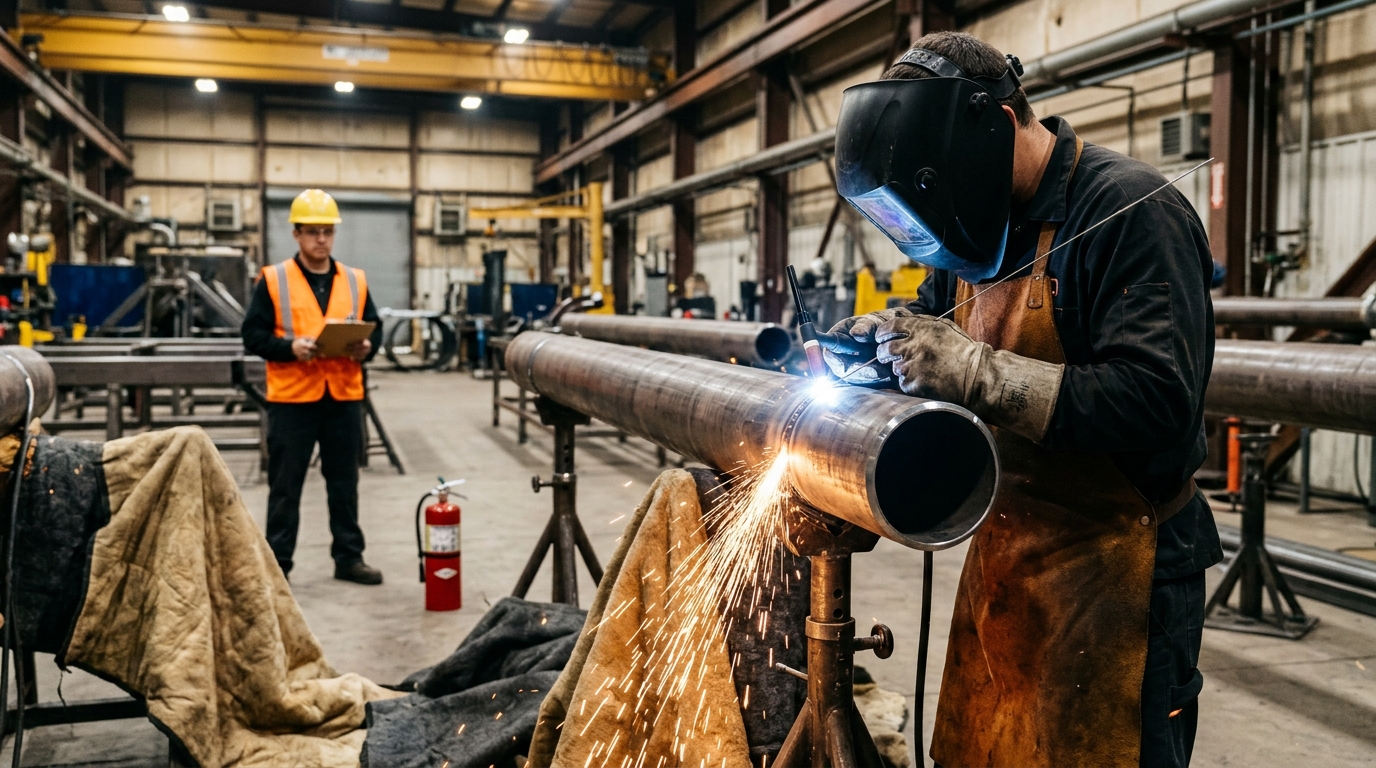
Keep non-essential staff outside the test boundary, never stand facing test end caps, and ban hammering or tightening bolts under pressure. If a high-pressure leak occurs, stop the pump and bleed pressure remotely rather than approaching the jet. On oxy-fuel sets, install Flashback Arrestors on both regulators and torches, and post a dedicated 60-minute fire watch after hot work ends.
Download the 7-Page Mechanical Dossier
Download the Mechanical Method Statement and ITP SP-MEC-12 free in Word format, and verify lifting sling tensions before rigging pumps with the Sling Angle Calculator.