Generic method statements fail consultant review because they describe work in broad strokes: excavate, lay pipe, backfill. Supervising engineers look for measurable engineering stages, calibrated tools, and explicit Hold Points that stop work until inspection sign-off.
Hold Point vs Witness Point in Site Execution
A Hold Point stops execution completely until the consultant signs the Work Inspection Request (WIR). Examples include utility clearance before mechanical digging, trench shoring stability, and hydrostatic pressure testing. A Witness Point requires 24-hour notice to the consultant, and work may proceed if the consultant opts not to attend.
The 10 Engineering Stages of an Excavation Method Statement
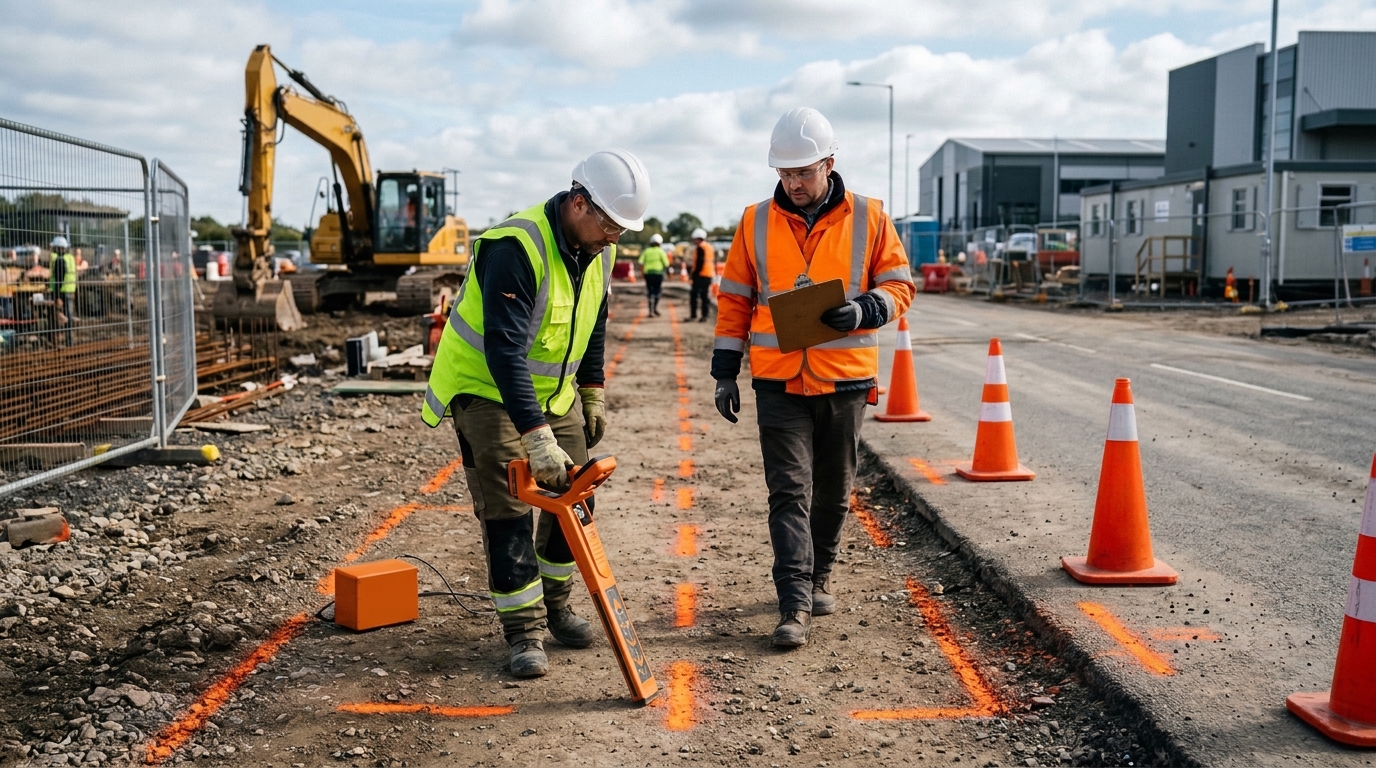
- Utility Scan and Trial Pitting (Hold Point): stake the centerline with a Total Station, scan full width plus 2m margins using a calibrated CAT and Genny, and dig hand trial pits every 15m wearing 1000V insulated gloves. Prohibit mechanical excavation within 1.0m of any marked service.
- Traffic Segregation: install interlocking rigid barriers with 1.2m protected pedestrian walkways and station a Banksman at site gates.
- Bulk Excavation: excavate in lifts and leave the final 150mm for hand trimming to protect bearing soil. Keep spoil piles at least 0.6m back from the trench crest.
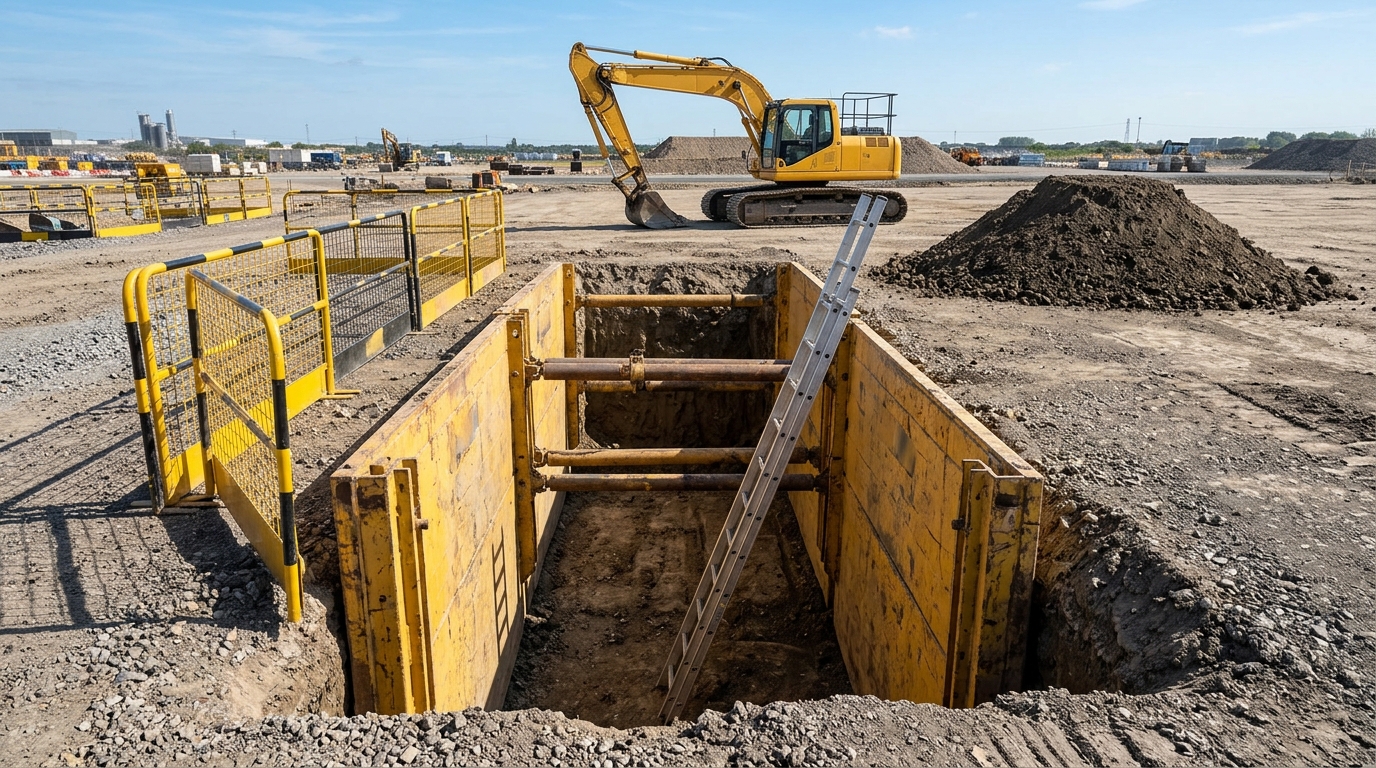
- Soil Classification and Shoring (Hold Point): once depth reaches 1.5m, cut 1.5H:1V slopes for Type C soil or install steel Trench Boxes progressively before entry. Place egress ladders every 7.6m extending 1.0m above the edge.
- Dewatering and Gas Monitoring: discharge groundwater through silt settlement tanks and log 4-gas readings every two hours at depths of 1.2m or more (O2 19.5 to 23.5%, H2S < 10ppm, LEL < 5%).
- Bedding and Laser Grade (Hold Point - WIR-01): place 150 to 200mm of washed sand or graded gravel bedding within ±15mm horizontal and ±5mm vertical tolerances.
- Pipe Lowering and Jointing (Hold Point - WIR-02): lower pipes with wide nylon slings at 45 degrees or steeper, halt lifting at 32 km/h wind, and clear trench personnel during overhead swings.
- Hydrostatic Pressure Testing (Hold Point - WIR-03): anchor pipe barrels, leave joints exposed, evacuate the trench, and hold 1.5x working pressure for two hours.
- Surround and Layer Compaction (Hold Point - FDT): surround pipes with stone-free sand to +300mm above the crown, lay warning tape, and compact in 300mm maximum lifts to at least 95% MDD per ASTM D1557.
- Surface Reinstatement, As-Built updates, and formal PTW closure.
Download the 7-Page Engineering Template
Download the Deep Excavation Method Statement SP-WMS-10 free in Word format, and verify safe trench angles with the Excavation Slope Calculator.