
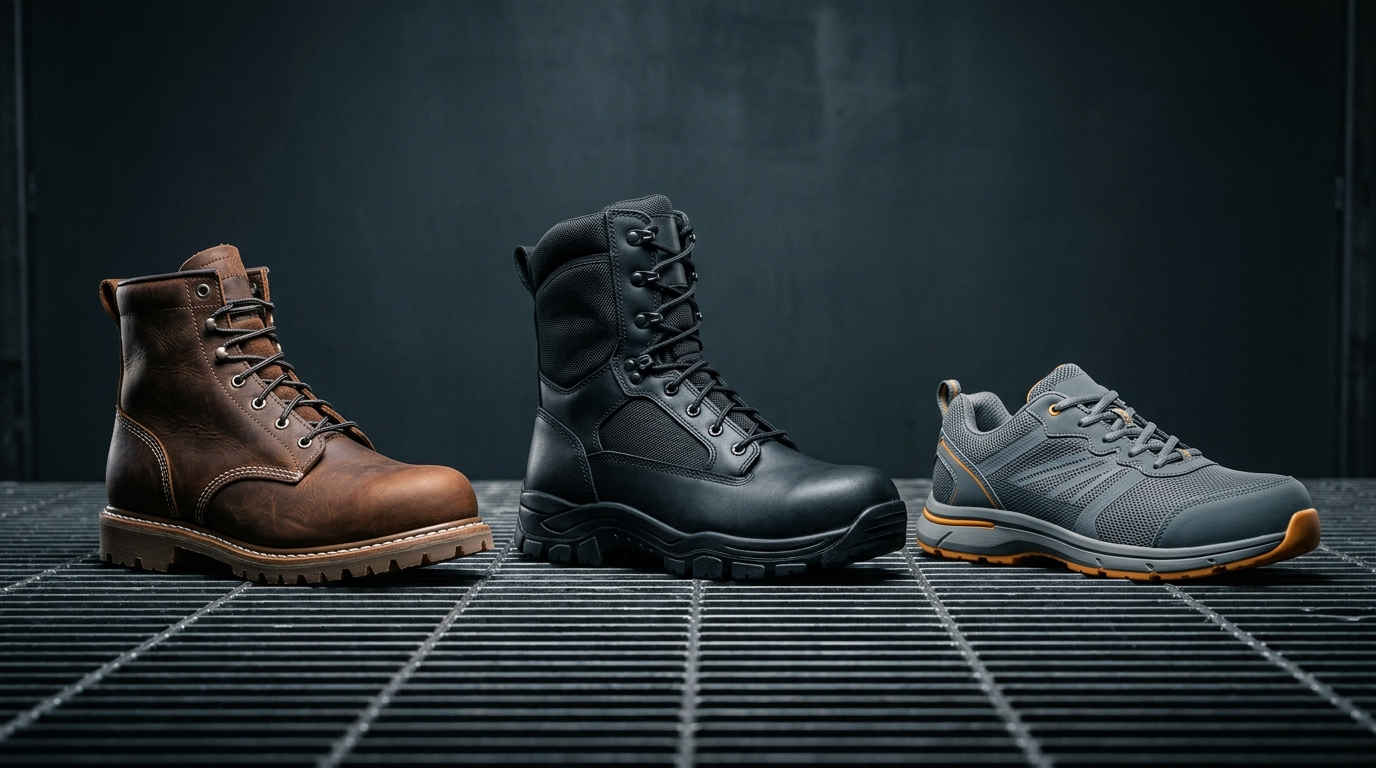
Industrial footwear must match surface hazards—from sharp rebar and nails on construction sites to oil spills and live electrical areas. EN ISO 20345 standardizes every safety boot with a clear class code.
EN ISO 20345 Safety Footwear Comparison
| Rating | 200J Toe Cap | Antistatic & Energy-Absorbing Heel | Nail Penetration Plate (P) | Water-Resistant Upper | Best Environment |
|---|---|---|---|---|---|
| SB | Yes | No | No | No | Basic dry work |
| S1 | Yes | Yes | No | No | Indoor dry warehouses |
| S1P | Yes | Yes | Yes | No | Dry workshops with sharp debris |
| S2 | Yes | Yes | No | Yes | Food processing & wet floors |
| S3 | Yes | Yes | Yes | Yes | Construction, Oil & Gas, Outdoor Sites |
Steel Toe vs. Composite Toe
- Steel Toe: Slimmer profile and lower cost, but heavier and conducts heat/cold.
- Composite Toe: Lighter, metal-free, non-conductive for electrical trades, and airport-scanner friendly—while meeting the exact same 200-joule impact standard.
Standardize Site PPE Audits: Capture photo-stamped footwear and PPE compliance reports offline with SafetyPro HSE. Claim your free 1-month Plus launch code.